


When it comes to protecting your home, fire safety is just as important as strength, style, and weather resistance. One of the most common questions homeowners ask is: Will roof shingles burn?
The answer isn’t so simple—it depends on the type of shingles, the conditions of the fire, and whether your roof meets specific fire-resistance standards.
In this guide, we’ll break down everything you need to know about how shingles react to fire and how to choose safer roofing materials.
Do Roof Shingles Burn?
Yes—some roof shingles can burn, but not all of them do.
Modern roofing materials are designed with fire resistance in mind, especially asphalt shingles, which are the most common type used in residential homes. Many of these are manufactured to meet strict fire safety standards.
However, the level of fire resistance varies depending on the material and installation.
Which Types of Shingles Are Flammable?
Different roofing materials behave differently when exposed to fire:
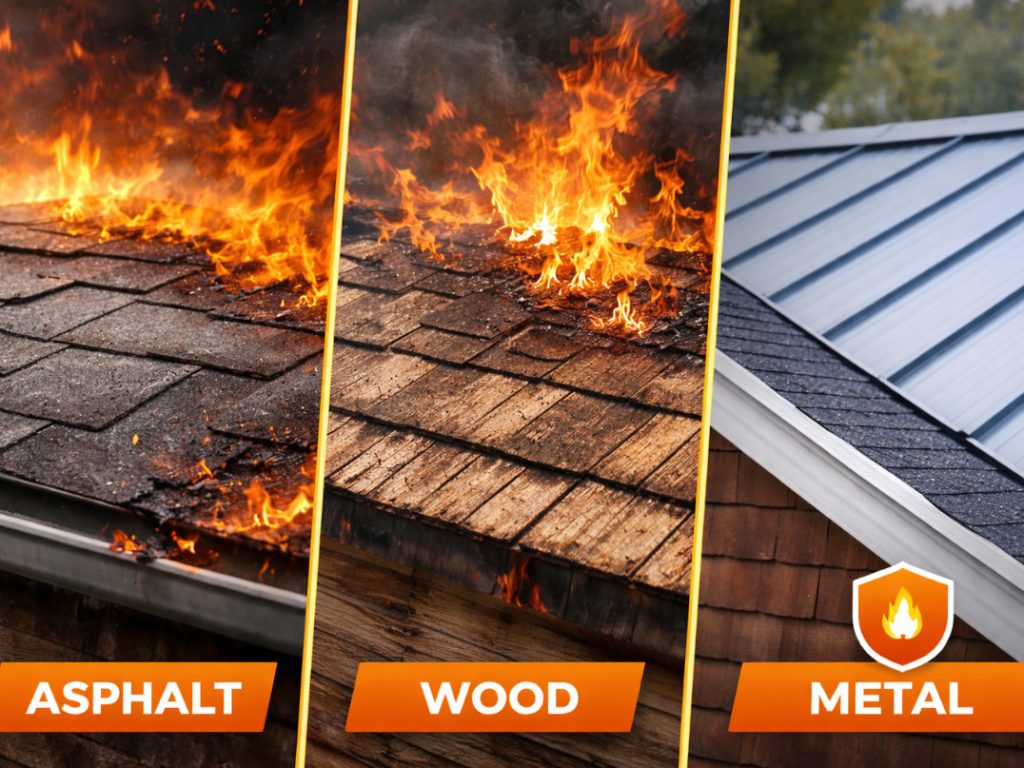
Asphalt Shingles
- Most common in the U.S.
- Typically rated Class A (highest fire resistance when properly installed)
- Fiberglass-based shingles are more fire-resistant than older organic ones
Wood Shingles & Shakes
- Naturally combustible
- Can ignite more easily if untreated
- Sometimes treated with fire retardants, but still higher risk
Metal Roofing
- Non-combustible
- Does not ignite
- Excellent fire resistance
Tile & Slate Roofing
- Also non-combustible
- Highly resistant to fire
- Often used in high-risk areas
Understanding Fire Ratings (Class A, B, C)
Roofing materials are tested and classified based on how well they resist fire exposure.
Class A (Best Protection)
- Highest fire resistance
- Withstands severe fire exposure
- Common in fiberglass asphalt shingles
Class B
- Moderate protection
- Handles moderate fire exposure
Class C
- Basic protection
- Suitable for light fire exposure
Unrated
- No tested fire resistance
- Higher risk
👉 Most modern residential roofs aim for Class A rating.
Fire Behavior: Wildfires vs. House Fires
Fire risk doesn’t come from just one source.
Wildfires
- Burning embers land on the roof
- Debris (like leaves) can ignite
- Vulnerable areas: valleys, gutters, edges
Structural Fires
- Fire starts inside the home
- Heat rises and reaches the roof
- Roof materials can slow or accelerate spread
Building Codes and Insurance
In many areas (including parts of Georgia), building codes require certain fire ratings for roofing materials.
Insurance companies may also:
- Offer better rates for fire-resistant roofs
- Require upgrades in high-risk areas
Having a Class A rated roof can improve both safety and insurability.
How to Improve Your Roof’s Fire Resistance
Even if your shingles are fire-rated, maintenance plays a big role.
🔹 Keep your roof clean
Remove leaves, branches, and debris that can ignite.
🔹 Maintain gutters
Clogged gutters can trap flammable materials.
🔹 Upgrade underlayment
Fire-resistant underlayment adds an extra layer of protection.
🔹 Seal vulnerable areas
Chimneys, vents, and edges should be properly sealed.
Real-World Fire Scenarios
In many house fire cases, the roof isn’t always the first point of ignition—but it can influence how quickly fire spreads.
Homes with fire-resistant roofing systems tend to:
- Resist ignition longer
- Slow fire spread
- Provide more time for emergency response
Final Thoughts
So, will roof shingles burn?
The answer depends on the material—but with modern roofing systems, you can significantly reduce fire risk by choosing the right shingles and maintaining your roof properly.
If you’re considering a roof replacement, investing in fire-resistant materials is one of the smartest decisions you can make for your home’s safety.